

The fundamentals of choosing a fan
The fundamentals of choosing a fan
Style and performance are equally important when choosing a ceiling fan. One should not be sacrificed for the other.
Style and performance are equally important when choosing a ceiling fan. One should not be sacrificed for the other.

LOCATION IS EVERYTHING
LOCATION IS EVERYTHING
Where you will install your fan is the first step in selecting the right fan for your space.
We've made it easy for you! Look for these icons to identify location rating:

Dry, indoor location
Dry, indoor location
Choose from any of our fans: dry, damp or wet rated.

Outdoor covered or high-humidity indoor location
Outdoor covered or high-humidity indoor location
Choose from our damp or wet rated fans.

Outdoor location with likely direct contact with water
Outdoor location with likely direct contact with water
Choose from our wet rated fans.
SIZE MATTERS
SIZE MATTERS
The size of your room can help determine the size of your fan, identified by blade sweep.
The size of your room can help determine the size of your fan, identified by blade sweep.
The following are general guidelines; however, scale is personal preference.
-
Large diameter fans can go in both small rooms and larger rooms. It’s all in the look you desire.
-
Optimal performance will come from mounting your fan in the center of the room.
-
If you have a long or large room, consider the use of multiple fans.
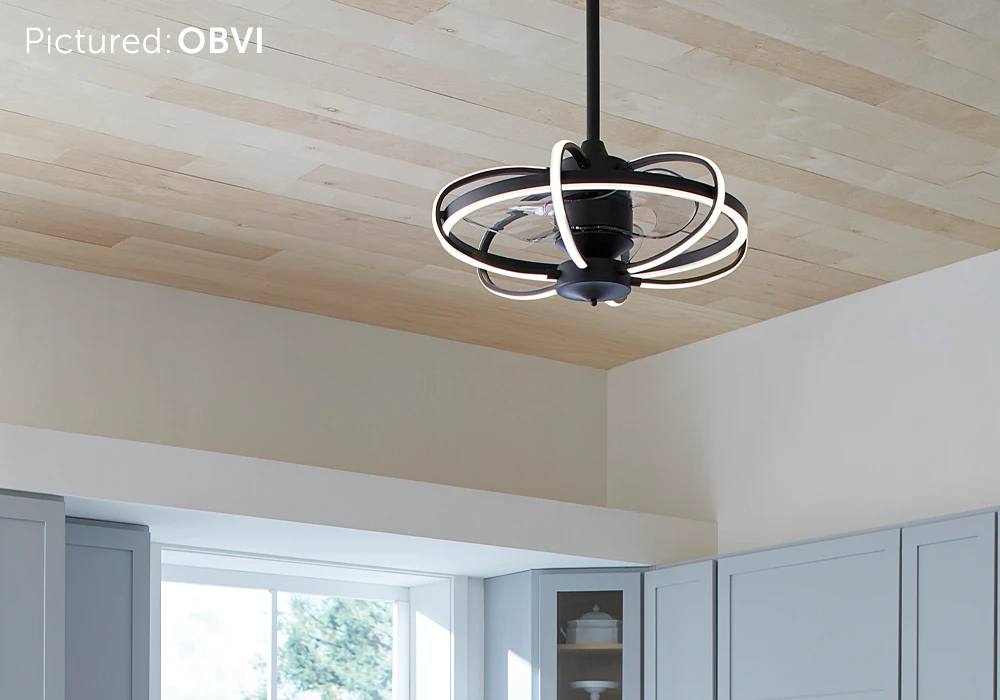
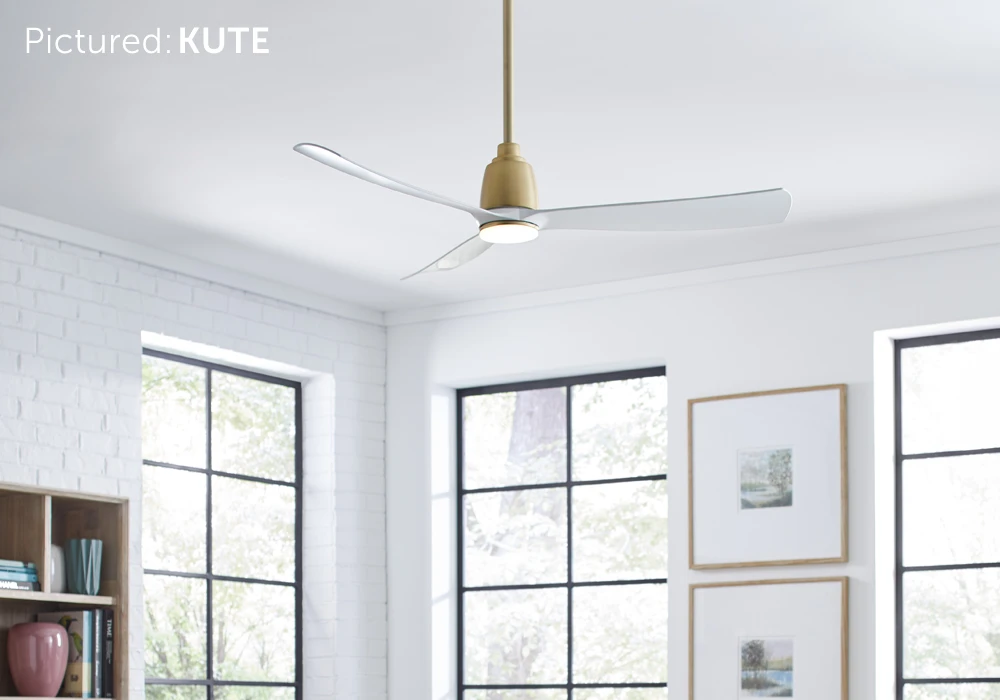
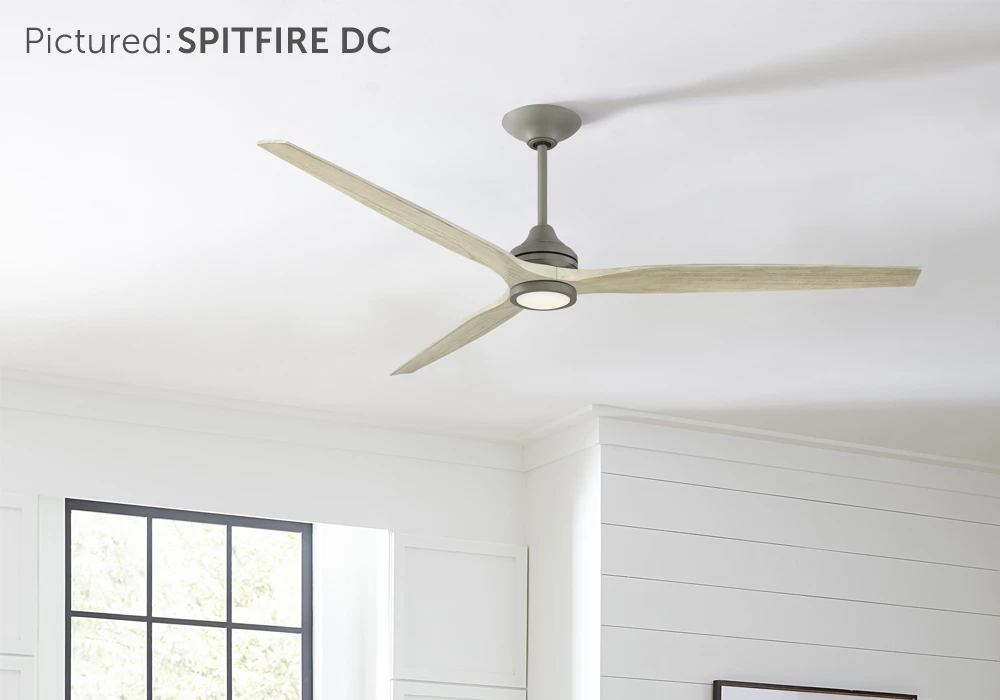
Recommended downrod length is based on ceiling height
Recommended downrod length is based on ceiling height
Ideal distance from floor to fan blades is 7 to 9 feet.
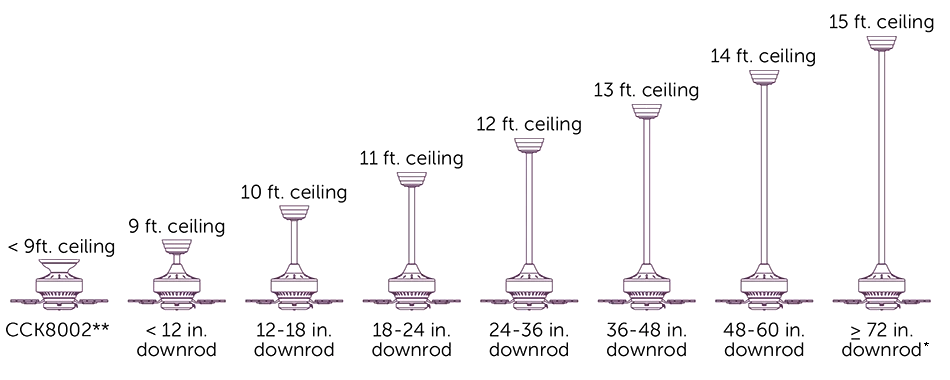
*for lengths greater than 72", join two downrods with a coupler.
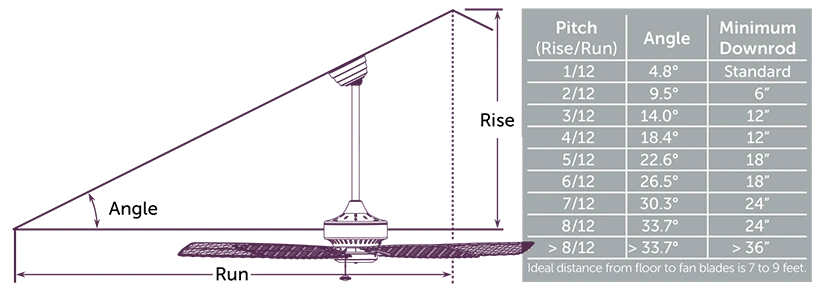
For sloped-ceiling applications
For sloped-ceiling applications
IDENTIFYING FEATURES IMPORTANT TO YOU
IDENTIFYING FEATURES IMPORTANT TO YOU
We offer a diverse line of fans with equally diverse features.
We offer a diverse line of fans with equally diverse features.
As you choose your fan, identify the features that matter to you. Use the Features Legend below to understand the Features icons.

UNDERSTANDING AIRFLOW
UNDERSTANDING AIRFLOW
AIRFLOW: CFM VS. FPM
AIRFLOW: CFM VS. FPM
Every room has different airflow needs. Understanding airflow—volume measured in cubic feet per minute (CFM) and velocity measured in feet per minute (fpm)—helps you choose the right fan for your space. We list CFM and fpm values at both low and high speeds to give a clear picture of each fan’s full performance range.
Note that in climate-controlled rooms like living rooms, bedrooms, and offices, nearly all our fans—with their multiple speed settings—will deliver the comfort you need. In these spaces with climate control, you can focus on what matters most: style, lighting output, and how the fan fits your décor.
When does velocity matter?
When does velocity matter?
In outdoor or non-climate-controlled environments, the breeze you feel, often referred to as windchill, is more important. This is where a higher velocity comes into play, making heat and humidity more tolerable.

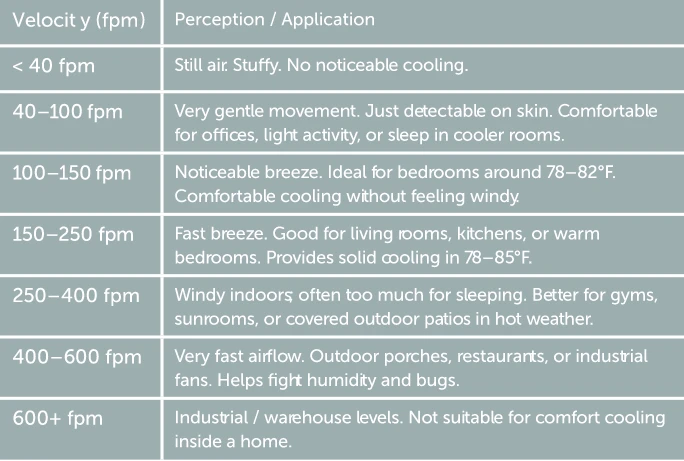
Velocity (fpm) matters most in outdoor spaces.
FPM Guide
FPM Guide
When does volume matter?
When does volume matter?
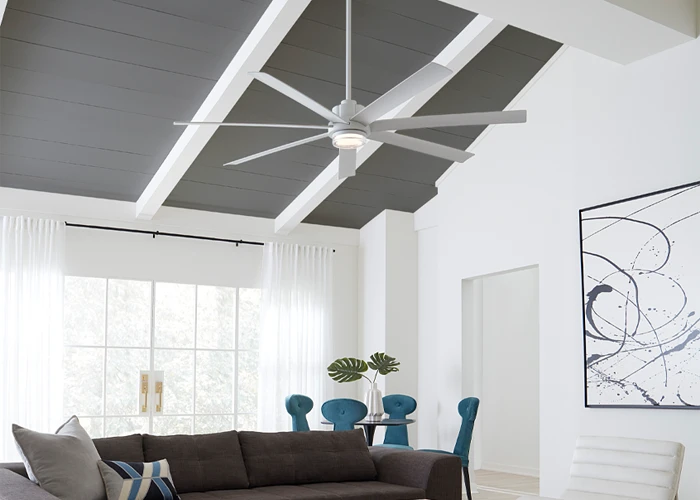
In large, open rooms or tall spaces, the goal is often to keep air from becoming stagnant or stratified. Here, CFM—the total volume of air movement—becomes the key metric for circulating hot and cold air and maintaining overall comfort.
CFM Energy Guide Labels
CFM Energy Guide Labels
Energy information at high speed:
-
Airflow
6942
Cubic Feet Per Minute
The greater the number, the greater the air moved
-
Electricity Use
65
Watts (excluding lights)
Energy consumed
-
Airflow Efficiency
107
Watts (excluding lights)
The greater the number, the more efficient the fan is
SEASONAL CEILING FAN USE
SEASONAL CEILING FAN USE
Ceiling fans save money year-round when turning in the proper direction
Ceiling fans save money year-round when turning in the proper direction
WARM WEATHER
WARM WEATHER
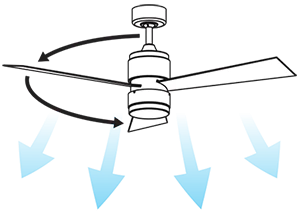
Airflow with counterclockwise rotation, as you look up, provides a cooling breeze
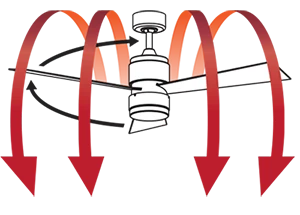
COOL WEATHER
COOL WEATHER
Airflow with clockwise rotation, as you look up, forces warm air downward.